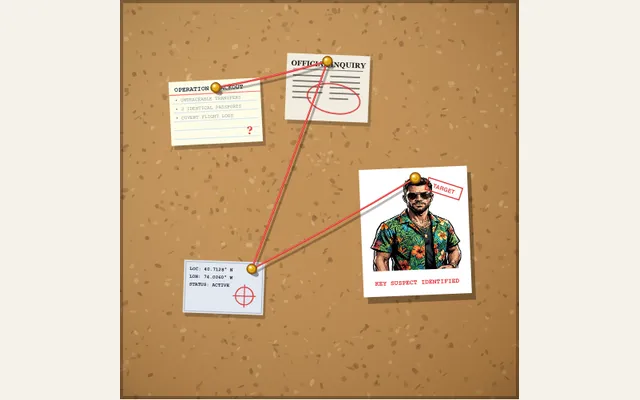
Conspiracy corkboard
Animate a detective conspiracy corkboard with pinned evidence cards, stretching crimson yarn, and a cinematic camera swoop pulling focus to the final smoking-gun photograph.
Try this effect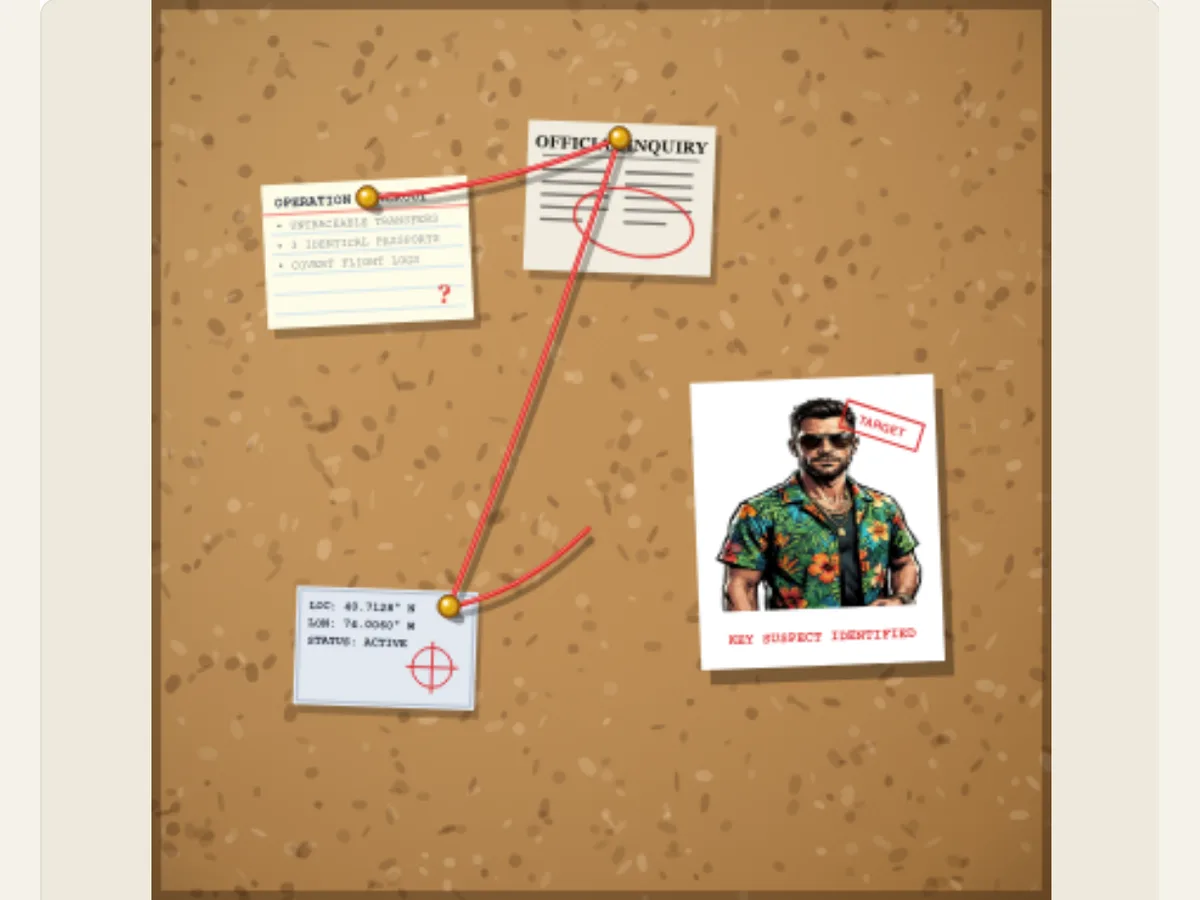
Connect the clues in a fictional investigation
A corkboard is able to create a visual question out of several different images. Which image will follow the last one? Conspiracy Corkboard creates a story language by using pinned evidence, a specific corkboard surface, color-coded yarn, a headline for the case, and a final lead-in note. Conspiracy Corkboard can be used to begin a mystery short story; to set up an escape room puzzle; to provide the framework for an investigative fiction podcast; or to change the pacing of a documentary-style title card.
This creates a visual representation of a scene and not a record of an investigation. It does not provide any analysis of a case, determine if there is a suspect, or demonstrate that two real individuals/events were linked. When you publish your work, use fictitious names, appropriate images and provide context for your viewers. While a "red thread" may be a common way to tell stories, it does not serve as evidence. If the video you create features a factual investigation, you should keep all factual reporting and supporting documents separate from the "red thread."
Select the board surface before placing the evidence
The Corkboard Theme features three different options for your background: traditional honey cork, a dark chalkboard or black felt, and an industrial kraft blueprint wall. How each option affects how the pins, photos, and lines appear on the corkboard is determined by the surface used. Honey cork is a classic option with a warm, textured feel; blackout provides a feeling similar to an evening investigation; kraft grid is a way to tie clues together as if they were displayed on a studio or archive wall. When choosing a background, consider both the mood of your project and how well the images you intend to use will stand out against it.
The image uploaded from "Smoking Gun Photo" provides the primary visual. It is more effective to use a cropped version of this image than to include the entire screenshot of the board. The reason for this is that the board must provide at least one identifiable clue. In cases where the original source contains people or private records, it should be possible to utilize those sources within the final product. A smaller sized image retains its significance as the composition is made smaller; however, a large number of items in the frame may cause multiple clues to become unidentifiable. Start with one key image and expand beyond that only if necessary to tell the story.
Scroll sideways to compare every column →
| Control | Available direction | What it changes |
|---|---|---|
| Board theme | Cork, noir or kraft | Sets the investigation atmosphere |
| Headline and lead | Editable case wording | Defines the central clue |
Use thread and hardware as hierarchy cues
Yarn Thread Style is available in three different options: Crimson, Hazard Yellow, and Black Wire. Pushpin Hardware has three different styles as well: Brass Tacks, Red Plastic Pushpins, and Polished Chrome Needles. These options will help differentiate your clues from each other; however, color should be used with intent. Crimson thread is easily identifiable as a mystery clue; Hazard Yellow stands out well against dark felt; Black Wire may fit a restrained surveillance aesthetic. The type of pin you select can enhance the material of your board or create a controlled contrast.
The animation has strong visual lines, so please connect only those pieces of evidence that relate directly to finding the last item in the scene. When there are too many intersecting lines in the scene, the photograph itself can be lost in visual clutter, making the scene appear as visual noise. It is best to place the first clue near where the camera will stop moving, and let the remaining items be used as supporting material. If the last item is difficult to locate, try removing a line that does not contribute to locating the item, or use a brighter color for your next thread rather than placing another photograph in the scene.
Write a case headline and lead note without implying real evidence
Case Headline lets viewers know what the board is about; Smoking Gun Note gives the last clue/point of interest. For a fictional thriller, a headline such as "THE MISSING NEGATIVE" and a first note such as "FRAME 12 DOES NOT MATCH" can create a story line without using an individual's name. When doing a classroom activity, make up details so that students will be able to understand the visual reasoning of the board without getting the prop mixed up with a real file.
A title is meant to help direct the viewer to what they are viewing, rather than provide a conclusion that will be impossible to substantiate. Do not refer to an uncorroborated image as a "smoking gun" when the video is nonfiction. Also, do not use the board to suggest guilt. You can indicate where the story is heading with a simple statement such as "TIMELINE QUESTION." This will allow you to continue telling the story and allow viewers to draw their own factual conclusions based on the reporting. Since the board is an artificially produced transition, you must be clear about its fiction status at all times if that distinction may impact someone's reputation.
Build a mystery teaser with one visual turn
A filmmaker who uses short forms may begin their film by showing a picture attached to a honey-cork board. Then, they will use a red line to connect it to another document. Finally, they will finish on the main note. The headline of the case being shown will be displayed at the top of the screen. The note that was left will provide a question for the next scene. This type of introduction can also be used for an actual fictional escape room puzzle or a podcast episode. Later in the video, a title card will display the podcast episode's name and its release date.
A museum educator may utilize the "noir" environment for an imaginary archives assignment. Viewers will view a photograph, follow a line on the photograph, and compare the photograph to an imagined document. Then the lesson can be used to teach how to identify a visual connection vs. credible information. This differentiation is important as the board's dramatic design supports a fast conclusion, but careful narration can slow down this assumption and allow the scene to assist in teaching rather than being replaced by it.
Arrange the final focus before refining every prop
An effective order for editing is to first pick the board surface, second to upload the central image, third to create the title for your case, fourth to compose your opening paragraph. Next, you will pick the threads and pins. Finally, preview where the camera will focus on the board and add/subtract information based on what can be seen from that viewpoint. You want to make sure your final image provides sufficient space for viewers to understand the main clue and the associated notes. If the board is too cluttered with items, take away some of the props prior to reducing the size of the headline or cropping out parts of the evidence photo.
Movement and duration of projects help define how fast a scene will play. Slowing down a camera movement provides more time for viewers to notice each connection made by the camera. Conversely, if you are creating a quick teaser, you do not need as many clues and your title should be shorter. To view the complete animation in the correct aspect ratio, click on the link below. The landscape format can accommodate multiple board detail views, whereas a mobile portrait version of the video may result in losing the outer edges of the frame. Therefore, you should position your most significant content within the middle portion of the frame and ensure that your ultimate message remains within the safe area.
Export the board as an overlay or a complete frame
The export dialog provides several options to save your work. You can create a PNG still, GIF, browser compatible video or a sequence of transparent PNGs at 30 fps using this effect. The sequence is ideal if your editing software can import numbered frames and you would like to have the board animation displayed as a transparent layer. However, video exports will remove all transparency from the image. If you select a green canvas you may be able to composite with chroma keying. In addition, GIFs will also have a solid background which makes them great for quickly sharing your work but less than ideal for creating overlays in a timeline.
The still images are used as thumbnails, posters, or episode cards; the exported video provides the camera motion in the final edit. Watch the imported video against the actual footage to make sure the thread colors and evidence stand out. You should keep the project files for possible other episode title ideas or prop placement options. There is also a paper evidence folder that is associated with this project called the Investigative Dossier. The Forensic UV Blacklight option creates a unique discovery sequence that is visually different than the rest of the project. Finally, the Newspaper Research option allows you to search for articles using an editorial search sequence.
Keep names, photos and claims within the story’s permissions
A corkboard can lend credibility to a made-up story, so it's important to be careful with the photo and words that appear on the corkboard. Use photos taken by yourself, photos licensed through a third party (i.e. iStockphoto), or photos that you have permission to use. When using a picture of a living person — such as a current client, co-worker, or public figure — do not tie the image to a false claim. For sample projects, it may be better to create fake names and records. It will be much easier to explain what is happening in the scene if you do this.
The board being part of non-fiction, verify the claims and sources outside the animation, and when required, use the scene as an illustration. The effect does not establish a chain of custody, nor does it confirm the authenticity of a document. A clear description, careful caption and factual narration assist in maintaining this boundary, while allowing the visual style to remain useful. Use the board to illustrate how the story was constructed, rather than imply the accuracy of the sources used to construct the story.